
Automated tools produce too much noise
Hundreds of warnings make it difficult to identify the issues that affect important pages.
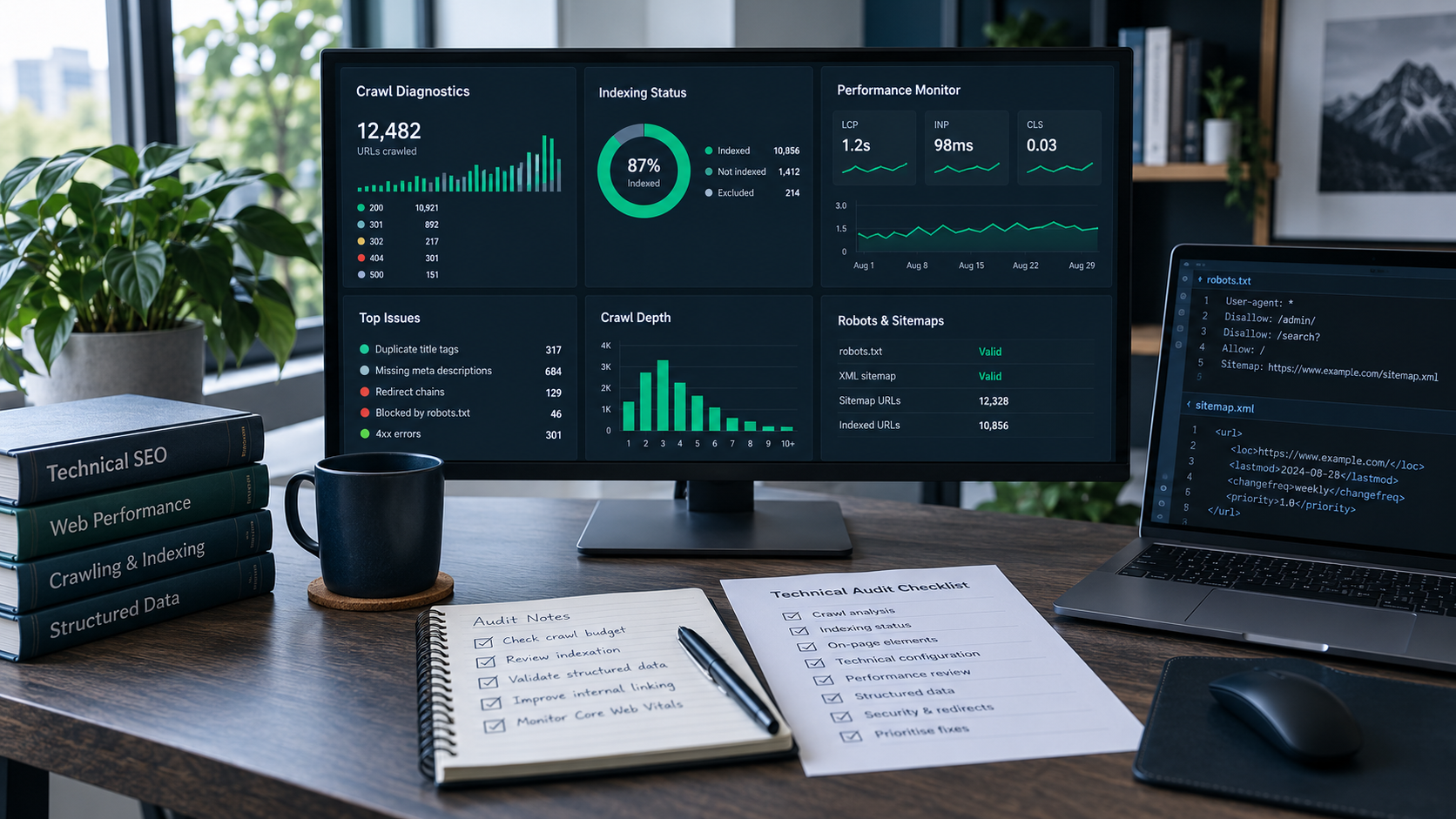
Combine technical, content, competitor and conversion evidence into a prioritized SEO audit your team can implement and verify.
I connect website health, search demand, page relevance and conversion paths so each recommendation has context, ownership and a validation method.
Discuss my audit requirements ↗Find the point where search performance, page experience and business outcomes stop connecting.
Hundreds of warnings make it difficult to identify the issues that affect important pages.
Teams fix crawl errors without knowing whether the affected page serves useful demand.
Tasks stall when the change, responsible team and validation method are unclear.
The audit depth follows the website size, business goals and the decisions your team needs to make.
Discuss this scope ↗Crawlability, indexation, rendering, architecture, performance and schema.
Queries, competitors, content gaps and keyword-to-page alignment.
Relevance, structure, evidence, internal links and conversion support.
Relevant links, mentions, business information and trust context.
Ranked actions, owners, dependencies and live verification checks.
Share your website, priorities and the decisions the audit needs to support.

The final audit explains the evidence, affected pages, likely impact, implementation path and how to validate the live result.
Discuss your audit scope ↗The best audit is shorter than the raw tool exports and clearer about what should happen next.
Show which services, products or customer journeys are affected.
Solve template and system problems at the right level.
Avoid treating every warning as equally urgent.
Explain how the team will know the fix works.
The work is designed to support implementation and the next decision.
The relevant findings, affected pages and commercial context.
A sequenced set of recommendations with owners and dependencies.
A practical method for checking live changes and performance.
The related case study shows how audit findings were organized into page, technical and performance priorities.

Each stage has a clear output and a decision before the next stage begins.
Confirm priority services, customers, commercial goals and what a valuable result looks like.
Review the relevant search, website, competitor and conversion evidence.
Complete the highest-value changes with clear owners and validation checks.
Compare search signals with useful enquiries or sales, then choose the next priority.
No single crawler or SEO platform can explain the complete problem. Search Console, Analytics, crawl tools and competitive research are compared to reach a useful conclusion.
Review my current position ↗Each platform answers a different question. The recommendation comes from the combined evidence, not a single tool score.
Each specialist page solves a different search problem. Use the related services to build the right combination without duplicating scope.
See the specific problems, scope, process and next step for this SEO service.
Explore Technical SEO ↗See the specific problems, scope, process and next step for this SEO service.
Explore SEO Strategy ↗See the specific problems, scope, process and next step for this SEO service.
Explore On-Page SEO ↗See the specific problems, scope, process and next step for this SEO service.
Explore Content Strategy ↗See the specific problems, scope, process and next step for this SEO service.
Explore Local SEO ↗See the specific problems, scope, process and next step for this SEO service.
Explore Ecommerce SEO ↗SEO and paid-media clients share what mattered during the work: communication, clear priorities and an approach shaped around their business.
What the service covers, when it is useful and how progress is assessed.
The scope can cover technical health, indexation, architecture, page relevance, content gaps, competitors, internal links, authority signals, conversion paths and measurement.
A smaller service website may take one to two weeks. Large, multilingual or ecommerce sites may require phased work by template and priority area.
Yes. Recommendations are prioritized and include context, affected pages, suggested ownership and a validation method.
Yes. Implementation can be scoped directly or coordinated with your writers and developers.
Automated tools are useful evidence, but they cannot judge business priorities, page intent, implementation constraints or lead quality by themselves.
Tell me what changed, which pages matter and what your team needs the audit to clarify.
You can also message Tabish directly on WhatsApp.