
Lead generation for stores
Connect local demand with service-specific product views, carts and checkout routes.

Build a measurable customer acquisition system that connects targeting, landing pages, calls, forms and follow-up with suitable completed orders.
Ecommerce analytics is the process of attracting potential customers, helping them understand the right service and creating a clear route to contact or book. It can combine Google Ads, Meta Ads, SEO, landing pages, forms, calls and follow-up systems.
A strong system does not treat every form submission as success. It defines a qualified customer enquiry, tracks the source and identifies which campaigns produce suitable orders rather than empty reporting volume.
See the customer journey ↓The work adapts to the way each business attracts, informs and converts suitable customers.
Connect local demand with service-specific product views, carts and checkout routes.
Reach people with relevant products, product needs and purchase intent.
Create consistent enquiry paths for product discovery, checkout and repeat-purchase journeys.
Route valuable purchases to the correct store, service and availability window.
These problems create wasted effort, weak conversion and unclear commercial reporting.
Paid and organic channels send traffic without one lead definition or follow-up path.
Fragmented reportingVisitors cannot quickly confirm service fit, location, trust or the next step.
Low conversion qualitySuitable purchases lose momentum before the business answers or confirms an purchase.
Missing decision dataThe team cannot see which channels, products and customer groups create healthy margin and repeat purchases.
Unclear returnStrategy, execution and measurement support the same service, location and purchase goal.
Choose the right role for Google Ads, Meta Ads, SEO and remarketing based on intent and urgency.
Create focused pages that explain the service, reduce uncertainty and make calls, forms or booking simple.
Define lead ownership, response expectations, routing and follow-up so valuable purchases do not disappear.
Track calls, forms, campaigns and later purchase outcomes using consistent definitions.
Each stage should answer the right question and make the next action clear.
Targeting focuses on the service, location and need the business can support.
Clear information, proof and expectations help the visitor assess fit.
Calls, forms and booking routes work clearly across mobile and desktop.
Fast response, qualification and reminders protect the value of each enquiry.
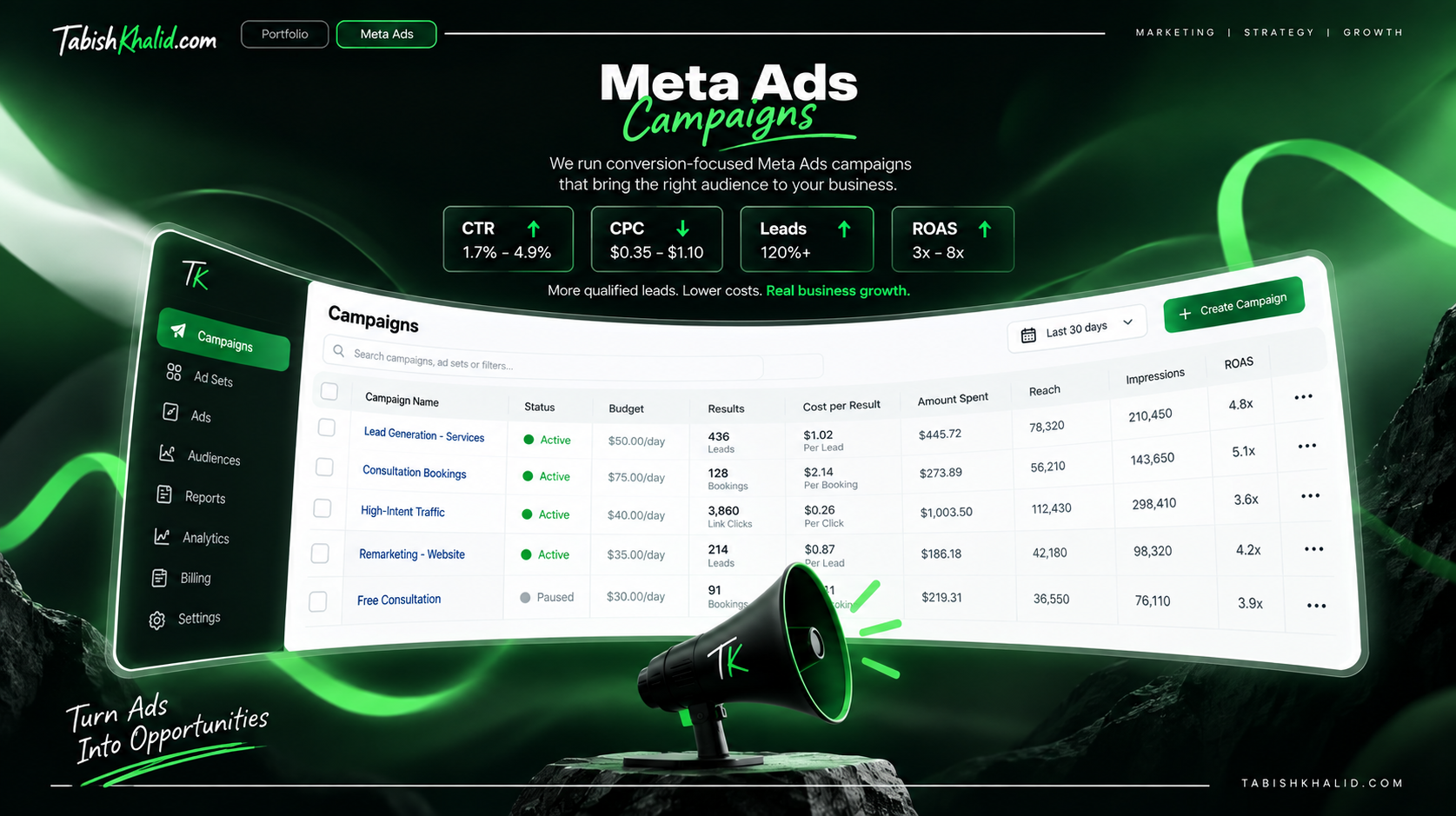
The acquisition plan joins channel targeting, landing-page conversion, lead routing and purchase reporting so performance can be improved as one system.
Review channels, pages, tracking and follow-up as one system.
Define valuable purchases, disqualifiers and booked outcomes.
Prioritize channels, audiences, keywords, messages and budgets.
Create clear requirements for trust, content and conversion.
Connect calls, forms, CRM stages and source data.
Report volume, quality, orders and acquisition cost.
Channel, behavior and outcome data are reviewed together before priorities are changed.
Reporting connects activity with customer value and purchase outcomes.
Move from baseline evidence to implemented priorities and qualified outcome learning.
Confirm services, locations, systems, current performance and the meaning of a useful customer action.
Identify demand gaps, experience friction, tracking weaknesses and operational constraints.
Complete or coordinate the work with the clearest impact on qualified customer outcomes.
Review evidence, confirm quality and sequence the next improvement cycle.
Ecommerce analytics attracts potential customers and creates a measurable path from marketing exposure to enquiry and purchase. It may use paid search, paid social, SEO, landing pages, calls, forms and follow-up.
The right mix depends on product demand and urgency. Google Ads can capture active searches, SEO can build durable visibility, and Meta Ads can create or remeasure demand.
A useful definition normally includes the required service, suitable location, genuine purchase need and practical eligibility. The business should define this before campaigns are optimized.
Yes. Lead sources, forms, calls and pipeline stages can be mapped into systems such as GoHighLevel or an existing CRM, subject to appropriate privacy controls.
Response should be prompt and consistent, especially for high-intent purchases. The exact workflow depends on opening hours, staff capacity and the type of purchase journey.
Useful reporting includes qualified enquiry rate, response rate, completed orders, show rate and cost per paying customer where data is available.
Yes. An audit can identify gaps across targeting, pages, tracking, routing and follow-up before new budget is added.
Tell me which services and locations matter, what is currently slowing growth and how the business defines a qualified enquiry.