
Search terms
Reviewed the language and intent behind paid clicks.
Case Studies/Google Ads
 Google Ads
The work replaced broad campaign activity with tighter search themes, stronger exclusions and a clearer conversion journey.
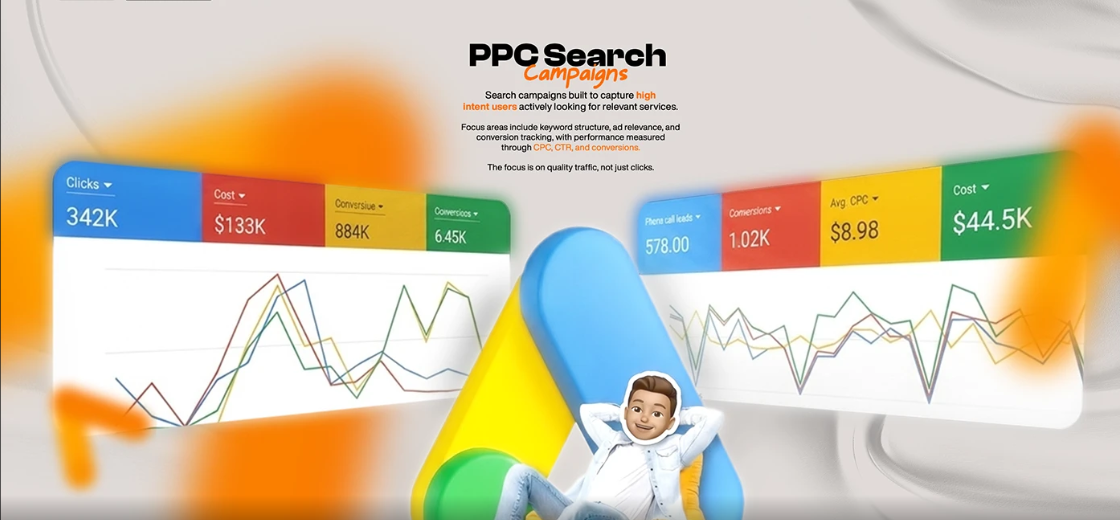
Clicks were arriving, but campaign structure did not make intent easy to control. Broad searches, mixed services and weak measurement made it difficult to see which spend was creating suitable enquiries.
The audit connected channel data with page experience and lead quality.
Reviewed the language and intent behind paid clicks.
Checked budgets, match types, negatives and theme separation.
Compared each ad promise with its destination page.
Reviewed the events used for bidding and reporting.
Figures are not reconstructed. Screenshots remain intact inside branded presentation frames.
Google Ads executionEvidence 01Conversion trackingEvidence 02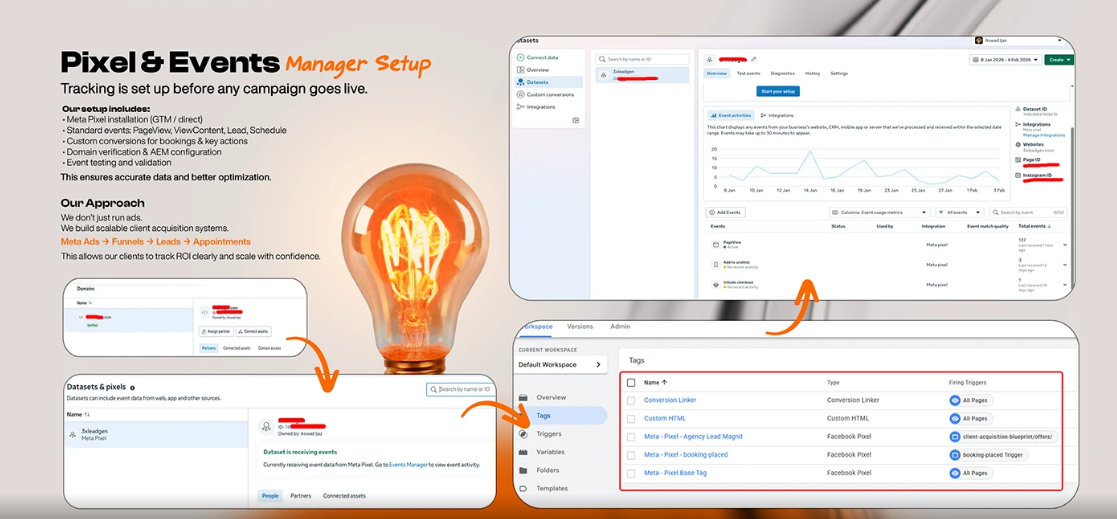
Evidence policy: Account names, customer data and commercially sensitive details remain confidential. A screenshot proves only what is visible inside that screenshot.
Campaigns were organised around clear services and search intent.
Irrelevant, research and unsuitable searches were excluded through routine query review.
The search, ad message, proof and next action followed one clear thread.
Useful actions were separated from weak or accidental events.
Budget and bids were reviewed against suitable enquiries, not raw conversion totals.
The outcomes below describe the verified implementation and learning. They do not promise identical results for another business.
Search term control reduced avoidable spend.
Each campaign had a defined role and destination.
Tracking supported more useful optimisation decisions.
Start with the commercial constraint, then choose the channel work that can solve it.
Share the service you want to grow, the evidence already available and where performance currently slows down. The first review identifies the most useful next step.
Understand the process, evidence and commercial focus before deciding whether this approach fits your goals.
Often, yes. The first step is to find wasted search terms, weak targeting, poor conversion tracking, inefficient bidding and landing-page friction. Budget changes should follow evidence, not replace account cleanup.
Campaigns are aligned with high-intent searches, clear exclusions, specific ad messages and relevant landing pages. Where possible, CRM or sales feedback is connected so optimization can favour qualified opportunities rather than every form fill.
The right budget depends on search demand, click costs, location, margins and the number of conversions needed for useful learning. I assess those factors before recommending a practical starting range.
Yes. Forms, calls, purchases and other meaningful actions should be validated first. Scaling from incomplete or duplicated conversion data can push spend toward the wrong traffic.
I review the campaign structure, search terms, ads, bidding, budgets, conversion actions and landing pages. You receive a prioritized explanation of what is wasting spend and what should be tested next.
Share your website, priority service and current acquisition challenge.