
Message clarity
Reviewed who the page served and what outcome it promised.
Case Studies/Conversion Optimisation
The review focused on what a suitable visitor needed to understand, trust and do before completing a commercial action.
Visitors had to interpret broad service language, search for proof and complete a demanding form before they understood the next step. Traffic data could not explain where confidence or momentum was being lost.
The audit connected channel data with page experience and lead quality.
Reviewed who the page served and what outcome it promised.
Checked navigation, proof, forms and mobile actions.
Compared source message with landing page expectations.
Reviewed whether measurement captured meaningful progress.
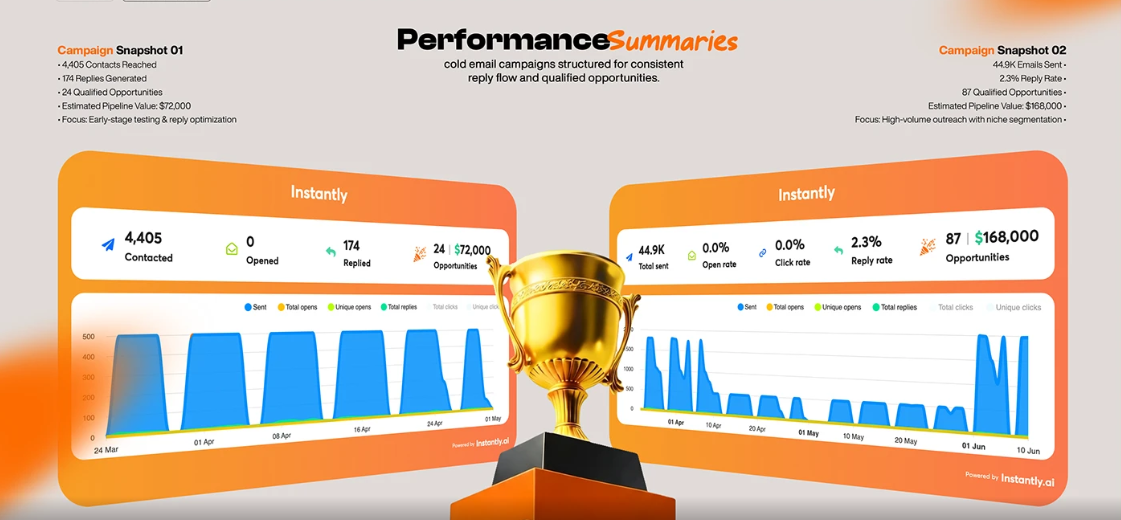
Figures are not reconstructed. Screenshots remain intact inside branded presentation frames.
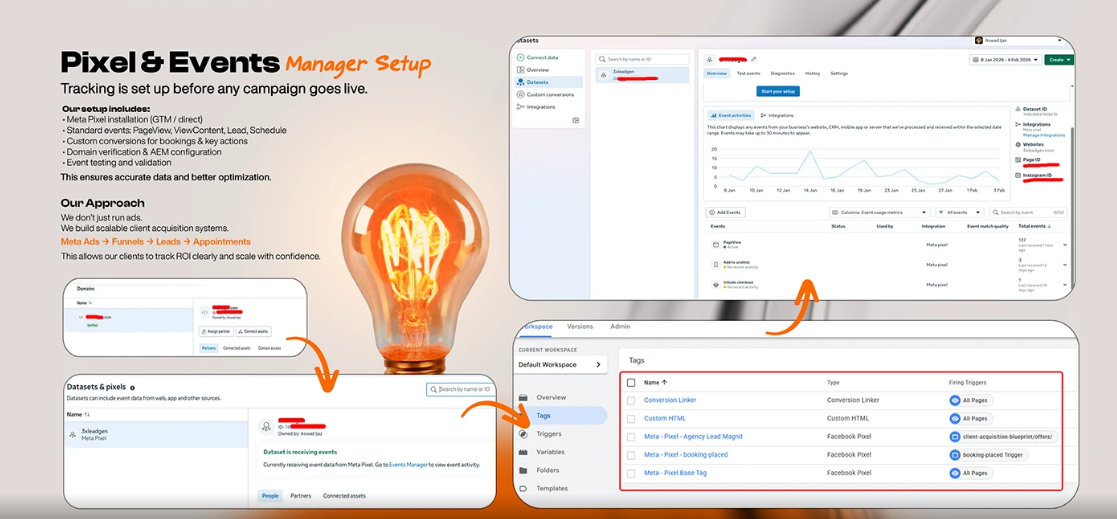
Evidence policy: Account names, customer data and commercially sensitive details remain confidential. A screenshot proves only what is visible inside that screenshot.
Audience, problem, outcome and next step were made easier to understand.
Relevant evidence and process detail moved closer to key actions.
Unnecessary fields and unclear requests were removed.
Tap targets, forms and call routes were reviewed on small screens.
Events captured useful steps before and after enquiry submission.
The outcomes below describe the verified implementation and learning. They do not promise identical results for another business.
Visitors could assess fit earlier.
Forms preserved qualification with fewer obstacles.
Journey events supported focused testing.
Start with the commercial constraint, then choose the channel work that can solve it.
Share the service you want to grow, the evidence already available and where performance currently slows down. The first review identifies the most useful next step.
Understand the process, evidence and commercial focus before deciding whether this approach fits your goals.
I combine analytics, funnel data, page reviews, form behaviour, recordings and customer questions. The goal is to find evidence of friction before recommending design or copy changes.
Large traffic helps formal A/B testing, but lower-traffic sites can still improve through research, usability fixes, message clarity, stronger proof and better forms. The validation method should match the available data.
Usually not. A focused program prioritizes the pages and components causing the greatest commercial loss. Clear changes to hierarchy, copy, proof, forms or calls to action may be more useful than a full redesign.
The primary conversion is tracked alongside lead quality, revenue or the next meaningful funnel step. Guardrail metrics are also reviewed so a higher form rate does not hide poorer enquiries or other negative effects.
We confirm the page, offer, traffic sources and target action. I then identify the strongest evidence, rank the opportunities and recommend the first change or test with a clear success measure.
Share your website, priority service and current acquisition challenge.